Calisthenics
Calisthenics in Pattaya: how to start bodyweight training
Scroll fitness social media for five minutes and you'll see it: muscle-ups, front levers, ring work. Calisthenics has gone from park niche to one of the fastest-growing ways to train, and for good reason. It builds strength you can see and use, it scales from absolute beginner to elite, and the skill element keeps training interesting in a way machines sometimes can't. Here's how to actually start.
Why bodyweight training took over
Three things explain the boom. First, the progress is visible and filmable: your first strict pull-up is a moment, and so is your first muscle-up two years later. Second, it trains strength and mobility together, since every move demands control through a full range. Third, the entry cost is a bar. No barbell maths, no machine queue, just you against gravity.
The five moves that start everything
- Dead hang. Grab a bar and hang with straight arms. Grip, shoulders and patience. Work up to 45 seconds.
- Bodyweight rows. Rings or a low bar, body straight, pull your chest to your hands. The honest path to a pull-up.
- Push-ups. Full range, elbows tracking back, hips locked. Elevate your hands if the floor version breaks your form.
- Support hold. Arms locked out on rings or parallel bars, shoulders down. The foundation for dips and everything above the bar.
- Hollow hold. Lie on your back, press the lower back into the floor, lift shoulders and legs. This is the body tension every advanced skill is built on.
Train these three times a week and the first pull-up and first dip arrive on their own. From there the classic ladder runs: pull-ups and dips, ring work, archer variations, and eventually the levers and muscle-ups you saw on your feed.
Progression beats intensity
The calisthenics mistake beginners make is chasing the impressive version too early. Bodyweight training rewards patience: master the easier variation until it's clean, then earn the next one. Reps you control build strength; reps you survive build bad habits. A simple rule: when you can do three sets of eight with perfect form, move up one progression.
Why train it indoors in Pattaya
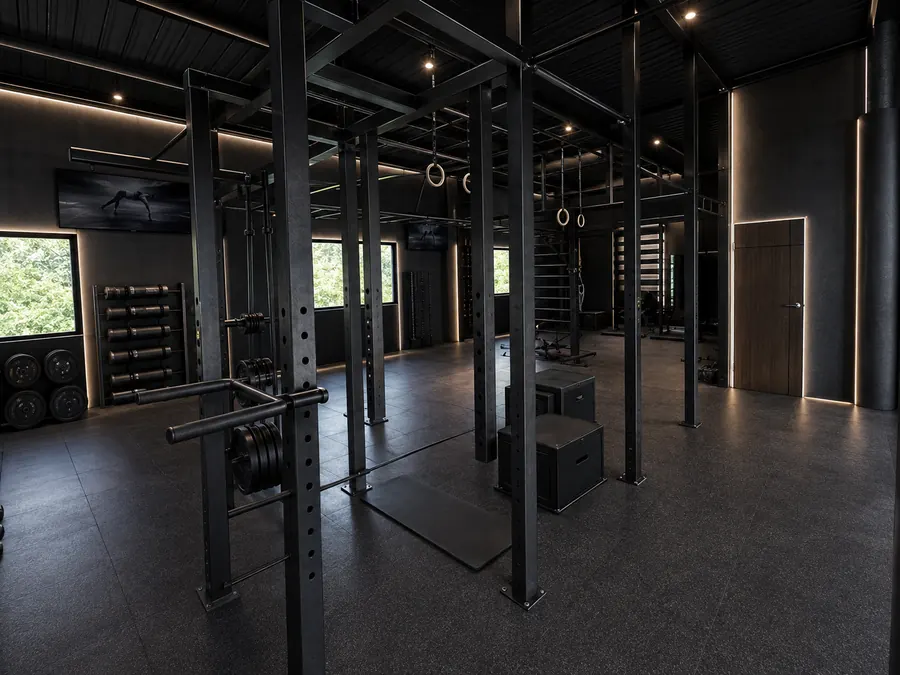
Outdoor bars exist here, but Pattaya's climate is brutal for skill work. Sweaty palms on a 35°C bar are a grip problem and a safety problem, and humidity cuts sessions short exactly when you're learning moves that demand fresh muscles. An air-conditioned hall changes the equation, which is why we built a dedicated calisthenics and CrossFit hall: a full rig with pull-up bars at every height, monkey bars, gymnastic rings, wall bars and plyo boxes, held at 25–26°C like the rest of the gym. Film your progress next door in the creator zone if that's your thing; plenty of the calisthenics community got started by documenting week one.
Your first pull-up is closer than you think. Most beginners who train rows twice a week get there in six to ten weeks.
Mix it or keep it pure
You don't have to choose a camp. Many of the strongest people on our floor pair bodyweight skill work with barbell basics: pull-ups and dips alongside squats and presses. The rig sits steps away from the free-weight floor, so a hybrid session is just a short walk.
Want to test the rig? Book a free trial, tell us your goal is calisthenics, and we'll show you the progressions on day one.